








KANBAN: A powerful method with 4 simple principles.
 Wouldn’t it be great to take home from the office every day the feeling of having accomplished something important? We all draw a large part of our energy from confirmation, from the perception that we have made a contribution. This basic principle of experiencing self-efficacy drives our motivation and confidence in ourselves. Unfortunately, for many of us who are not core members of a development team, personal effort disappears into the nowhere of daily office routines. We may be spinning at a high speed day in and day out, doing “lots of jobs,” but at the end of the day, we don’t really know where the time went. KANBAN can change that. By following 4 clear principles, the work becomes visible and gets into a good flow:
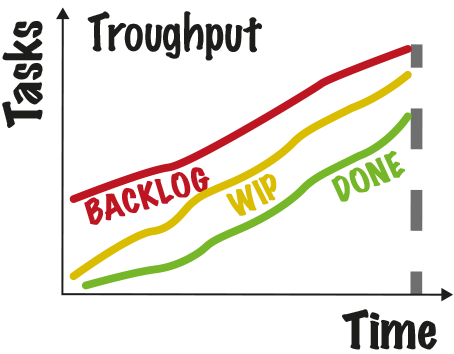
Especially the often less considered 4th step provides optimization potentials for the entire field based on objective and real data.
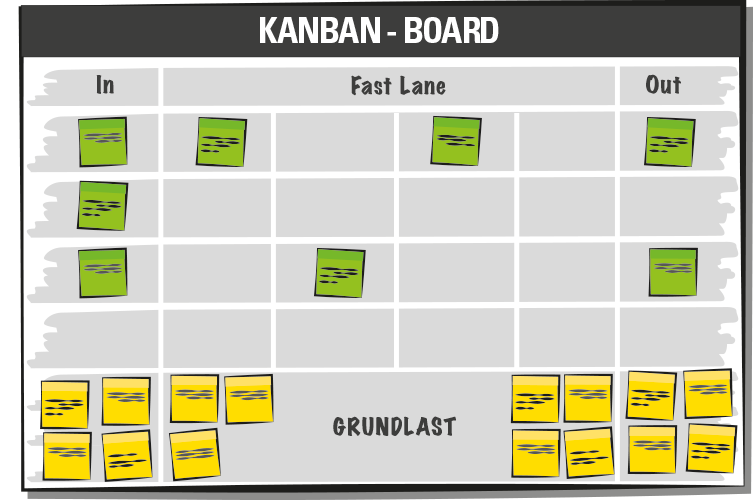
The board: finally see how the work flows.
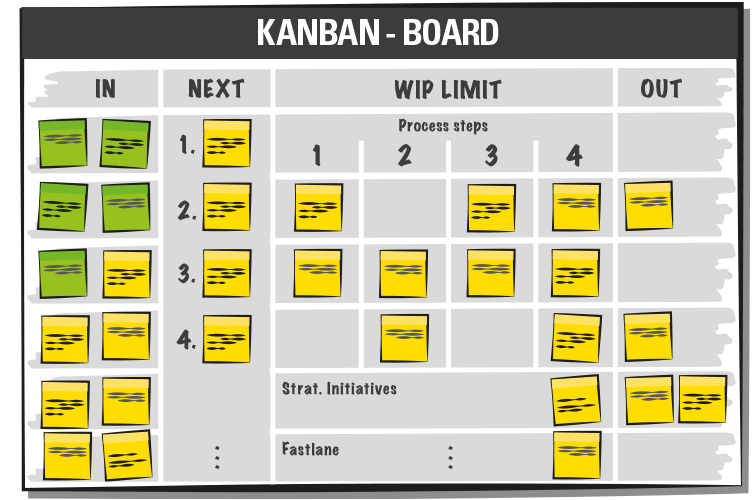
 With the KANBAN Board as the central element of the method, the work process is visualized. Each work step is displayed and each order that is currently being processed in the department is sorted into the work steps as a KAN-BAN (Japanese for: SIGNAL CARD). This makes it clear to everyone where an “order”, a work package, is currently located.
It is helpful to identify the current “ACTUAL process” with a Valuestream Mapping. This is often the first time that a KANBAN team really realizes what the joint work process really looks like and that it cannot remain as it is. Jobs pile up in critical process steps, nothing can be done in other steps due to lack of progress – the work does not flow. Recognizing this and improving the collaboration process is part of the method and must be accompanied and challenged by a coach.

Flow: PULL and WIP Limits.
In order to get into the magical “flow state” with a team, the team must be protected from overload! The easiest and most effective way to do this is to switch to “PULL” instead of “PUSH” and at the same time limit the maximum number of tasks in progress.
With PUSH, someone from the outside starts the processing of a task in a team, i.e. someone who is not processing this task himself – typically a manager who decides that the team must now start with a task. What happens? Well, sure, the team starts on that assignment. Add to that the fact that the team can take an unlimited number of tasks “in progress,” and soon there will be quite a few issues in progress. Great, right? Not really, because the entire team seems “clogged” and nothing gets done. Heavy and inefficient task switching: the perfect breeding ground for demotivation, frustration and poor performance.
How to do it better?
FLOW is achieved by KANBAN by introducing a “NEXT” column, where the next tasks are ordered in clear priority. These are PULLED by the team itself, whenever the “work-in-progress limit” indicates that the team can take one more task in progress. In this way, the team regulates itself and finds its way to a highly productive and relaxing work mode, the magical FLOW.
United in love: strategic departmental initiatives and project work.
 “Which is better. Catching chickens or mending fences?”
It depends… However, I don’t want to spend the rest of my working life catching chickens and I maintain that most of you feel the same way. So we should keep an eye on the fence as well. In the field, functioning toolchains, clear processes, and state-of-the-art expertise and working methods represent the intact fences that secure and frame the lush meadow of the prospering field. In this “meadow”, we can devote ourselves to the actual creation of value in peace with a high level of focus and great starting conditions.
All too often, however, a specialist area loses sight of this further development of the framework conditions: in the daily routine with many customer projects, “fence repairs” often sometimes get lost and are repeatedly postponed. How can this be countered?
The solution is as obvious as it is simple: in addition to the customer orders, all (!) internal department tasks are also displayed on the same board. The department management makes clear priority decisions as to which strategic initiative should be implemented next. To avoid overloading the team with the typically high number of customer requests and ideas for optimizing the department, the department management also uses the WIP limits: they give clear signals as to whether the team is allowed to actively work on another topic.
By including subject area topics on the KANBAN Board, several good things happen:
1. the work to advance the specialty comes out of anonymity and becomes TRANSPARENT to all.
2. optimization topics are included in the workload consideration and are therefore no longer “ON-TOP”.
3. these topics have a clearly named priority and are therefore IMPORTANT.
All this leads to these topics being perceived as more valuable and worthwhile in the eyes of the specialist area employees. This, in turn, leads to a significantly higher level of commitment – as soon as a specialist area topic is in active processing, it is completed with identical focus as is expected of the team in customer orders.

Well connected: 3 ways lead to the board.
 So how does the work get onto the board?
Depending on the organization of the company, three ways are possible, often in combination. Regardless of the chosen path, the visualization of work must NOT lead to double-entry bookkeeping – the work is visualized where it is done.
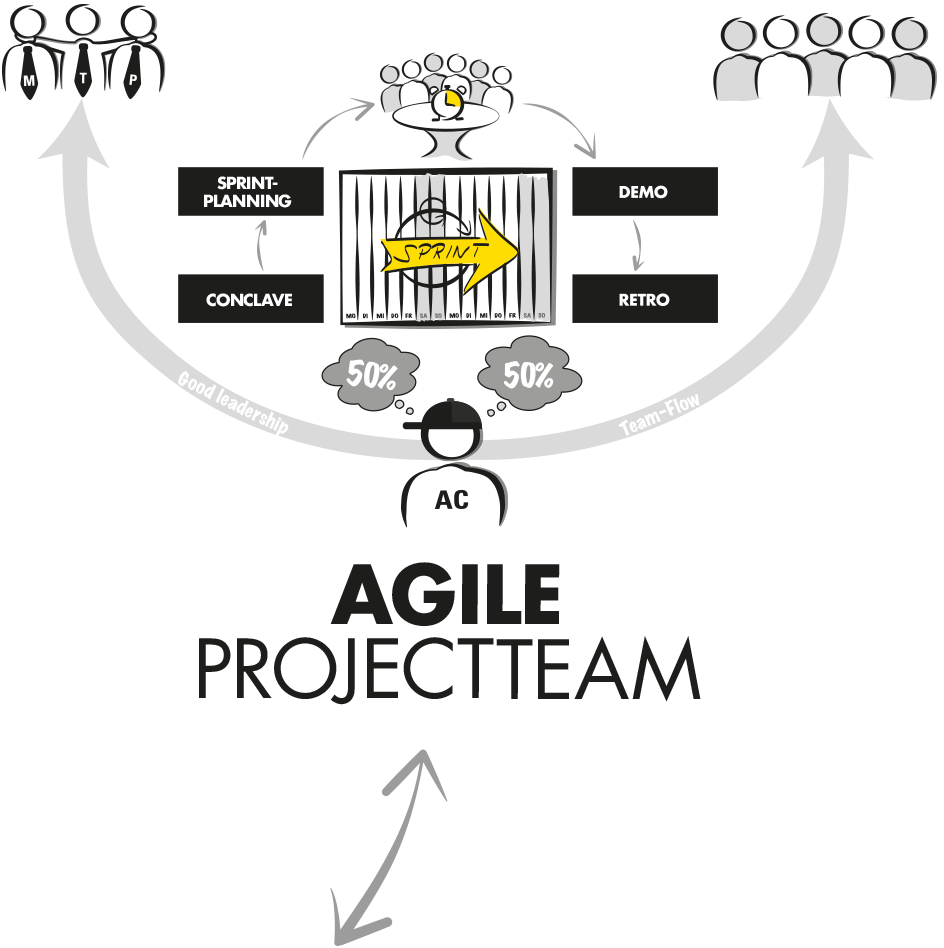
Mitglied im KERNTEAM: ist der Fachbereich durch ein Fulltime-Mitglied (A oder C Profil) im Kernteam des AGILEN Teams repräsentiert, werden dessen Ziele und Aufgaben auf den Boards des Projektteams geplant und visualisiert. Auf dem KANBAN Board im Fachbereich reicht eine Stellvertreterkarte des Projektes in seiner aktuellen Phase, um alle Kollegen zu informieren und, falls erforderlich, um Hilfe zu bitten.
Member of the ENLARGED TEAM: if the department is represented by a support member (B or D profile) in the AGILE team, the department member takes his goals and tasks from the planning of the AGILE project and visualizes them on the KANBAN board of the department. There, all tasks of all projects are processed together.
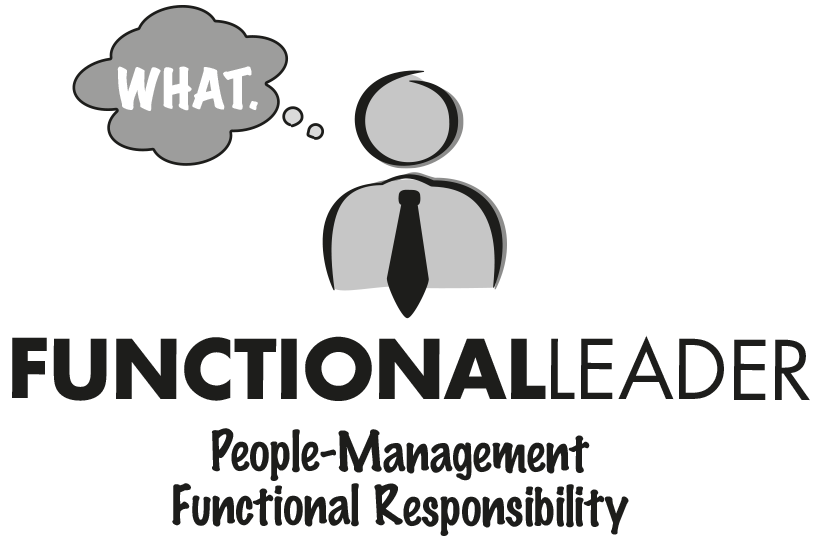
DIRECT REQUESTS FROM DEPARTMENT MANAGERS: customers, often in the person of the project manager, pass their requests and orders directly to the department manager, who then distributes them to the employees. This case, which is still often found in practice, is not optimal from our point of view and must be changed without fail, as it harbors the following dangers:
1. MISJUDGEMENTS: the tasks must be understood in terms of content. This inevitably requires deep technical penetration by the manager and often leads to misjudgments: the manager estimates assignments too optimistically and does not realize it because he or she trusts in his or her individual assessment.
2. MICRO-MANAGEMENT: the manager coordinates all issues like a puppeteer – employees fall into passivity and processes are not questioned or optimized by the team.
3. BOTTLENECK: Since everything runs through the manager, the manager is inevitably a bottleneck and thus prevents the specialist area from growing and entering a FLOW.
4. NO PERSONAL GROWTH: employees cannot grow because all responsibility is “often unconsciously” assumed only by the manager.



 DOWNLOADS